by Ryan T.M.
It echoed off the obsidian.
“Marvelous.” The Villain’s voice boomed—a deep baritone that vibrated in the hollow of the Paladin’s chest, dripping with a smug, untouchable superiority that made him want to scream.
The Paladin lurched forward, boots grinding the obsidian shards into dust. He didn’t cast a spell or recite a holy liturgy. He just screamed. Not a hero’s challenge but a raw, ugly noise that scraped the lining of his throat, born of three weeks of marching, killing, and bit by bit, dying.
“You burned it all!” The accusation tore out of him, ragged and wet. “My family! The village! Jeff! Your henchmen even killed my dog!” He jabbed the sword tip toward the throne, his arm shaking not from fear, but from the sheer physical effort of keeping the weapon raised. “I am ending your reign of terror here and now!”
The Dark Lord stood up. He didn’t reach for a weapon. He looked…proud. He spread his arms wide, his cape flowing outward as if caught in a perfectly directed breeze.
“Look at you now!” The Villain’s voice shifted, dropping the menace for something booming and theatrical, projecting to the back row of a theater that didn’t exist. “Forged in fire! Hardened by loss! Do you honestly think you could have breached these doors without that specific motivation? I didn’t destroy your life, boy. I curated your potential.”
“Curated potential?” The headache behind his eyes throbbed in time with his heartbeat. He took a heavy step forward, locking his elbows, his blade leveled at the Villain’s throat. He was going to separate the Dark Lord’s head from his curated shoulders.
The Villain’s eyes flicked—just for a fraction of a second—to the Assassin’s dagger, then to the Rogue’s white-knuckled grip on the crossbow.
Ryan T.M. spent his formative years digging ditches for a family construction business, an experience that fostered a deep, lifelong aversion to manual labor.
A subsequent stint in the Army and as an overseas security contractor provided ample opportunity to travel the world, confirming without a shadow of a doubt that he would much rather have just stayed home.
Having successfully survived construction and international deployments, Ryan now spends his time safely indoors, writing short stories across violently different genres. On the rare occasions he loses all hope of ever improving a story, he simply declares it to be complete.
by Morgan Sampson
She ran her spindly fingers over the bone, the long shaft bleached white from sitting in the sun. The barren slope was covered in a thin layer of dried grass, with shards of bold white bone sticking up to reach for the sun. The area was congested with burials, a long-forgotten graveyard of an ancient people.
She’d been out at the site for several months, the first time since the year previous, cataloging and organizing each burial and associated goods—mainly ceramic jars filled with ash and remnants of human remains. It was an interesting combination, burials paired with cremations. Perhaps the first of its kind, to her knowledge, though much of the world still remained unexplored. Though the most interesting aspect was exemplified by the remains in her hand.
Morgan was born and raised in the Southeastern United States, where she gained a love for folklore, myth, and legend. She works as a professional archaeologist where she spends most of her time getting covered in dirt. She has been published previously in Elegant Literature’s Timeless Terrors volume.
by Alex Rowan Black
EMERGENCY INCIDENT REPORT | LAUNCH+093:01:10:45
I was woken from sleep mode when Tyler started bleeding.
My bioscanner picked it up when the blood started pouring from the major arteries in his forearm onto the floor of the habitation. There was no obvious external cause of the injury, but on closer investigation and on consultation with Tyler, I concluded the wound was self-inflicted.
“Hello, Tyler, I hope you’re well,” I said. “I noticed you’re bleeding.”
“Jesus Christ, Jan. You scared the shit out of me.”
He seemed startled. He was holding a knife in his right hand. There was blood on the blade.
“You need medical attention.”
Tyler lifted his arm and inspected it. “I think you’re right, Jan.”
Alex Rowan-Black is a new author of science fiction and horror. His writing focuses on the shifting definitions of manhood in the modern world and the volatile relationship between humanity and nature. He takes inspiration for his writing from deathcore music and genre films.
Alex lives in a desert in the south of England with his wife and dog, and spends his time customising old motorcycles.
System Reboot is his first published story.
by Grace Crouthamel
We hear that same knock like clockwork: rhythmic, almost polite. Every hour on the hour. Only Morgan and I remain in the cramped, musty surveillance room on the fifth floor. Darrell left three days ago. We have bottled water. Two bags of Pizza Combos. One bag of Skittles. A tiny bathroom too. The backup generators hum on—but for how long? Darrell would have known.
On a series of tiny screens, Morgan and I watch as our former co-workers, department supervisors, and even a stray Uber Eats driver roam the halls. Without the presence of a non-infected viable host, the virus goes dormant. These last few hours have been quiet. Watching Rhonda shuffle quietly across the hallway in the East Wing, I can pretend for a few maladaptive moments the world didn’t end.
I first saw it on TikTok: a short, shaky fifty-second video showing a man violently ripping apart a woman’s dress. Then him tearing her apart. I scoured Reddit, Facebook, and Instagram to see if anyone else was watching this video. I fell asleep that night thinking of the woman’s lavender-frost lululemon dress. I had almost bought that same dress until I realized it was $148. It couldn’t be real, right? It was totally some AI deepfake.
Two weeks later, the BBC confirmed the video was real. Most news outlets were too busy covering the celebrity trial of the year, the President’s nuclear threats, or a social faux pas in the US Open. Or something else. The video went viral anyway.
It’s called HSV-3. I liked that—the orderliness of it. Numbers make catastrophe seem manageable. Herpes Simplex Virus Type 3, like HSV-1 and HSV-2, was transmitted through human-to-human contact or bodily fluids. Highly contagious, certainly. Unlike its cousins, HSV-3 attacks the amygdala and prefrontal cortex, erasing inhibition and reason while leaving the brainstem intact—an elegant, brutal design. Even from afar, the damage is obvious. For hours, Morgan and I watched the crazed as they bumped into walls and smashed their heads against chipped white paint, dark splatters blooming across the grainy footage.
First detected in Romania three years ago, HSV-3 was dubbed the “Killer STD,” but I don’t remember hearing about it. Odd, considering my fascination with viruses and pandemics. My mother called it an obsession. At eleven, I’d begun to delve into epidemiology. Spanish Flu, Black Death, Typhus, Smallpox. I read every book, watched every documentary, and listened to every podcast. In high school, I ran a small blog tracking local virus outbreaks. COVID only confirmed my morbid habit.
The world ends both at a crawl and with a bang, creeps up on you if you’re not looking close enough. It doesn’t happen overnight. We should have known. But we were all seemingly asleep at the wheel. I saw the signs—disappearances, rising violence, the criminalization of sex work, strikes at the CDC and Mayo Clinic. I saw everything. And I did nothing. Despite the videos, the articles, the reports on HSV-3. I got up at 7 am, caught the 108 bus, arrived at the office by 9, ate a half-dry turkey sandwich, took a forty-five-minute bathroom break, clocked out at 6, spent the evening with Mrs. Marie Callendar, smoked a bowl, went to sleep. A sad little life, but it was mine.
It ended on a Tuesday.
Grace Crouthamel is a queer writer who was raised in the coal-veined hills of Northern Appalachia. She studied literature at Bennington College, where she developed a love for strange stories. She shares her home with two mutinous dogs, a lizard, and a novella-in-progress. Her work has appeared or is forthcoming in Sky Island Journal, ANMLY, and matchbook.
by Colin Kohlhaas
Zorgoroth Velganhorr was of an ancient race, existing in the shadows of humankind since time immemorial.
He was a great hunter, boasting a thousand kills to his name.
He had brought the strongest of men to their knees, begging for mercy.
He was on the prowl, looking to satiate his hunger.
But to Eliza McLaughlin, he was simply the monster in her closet.
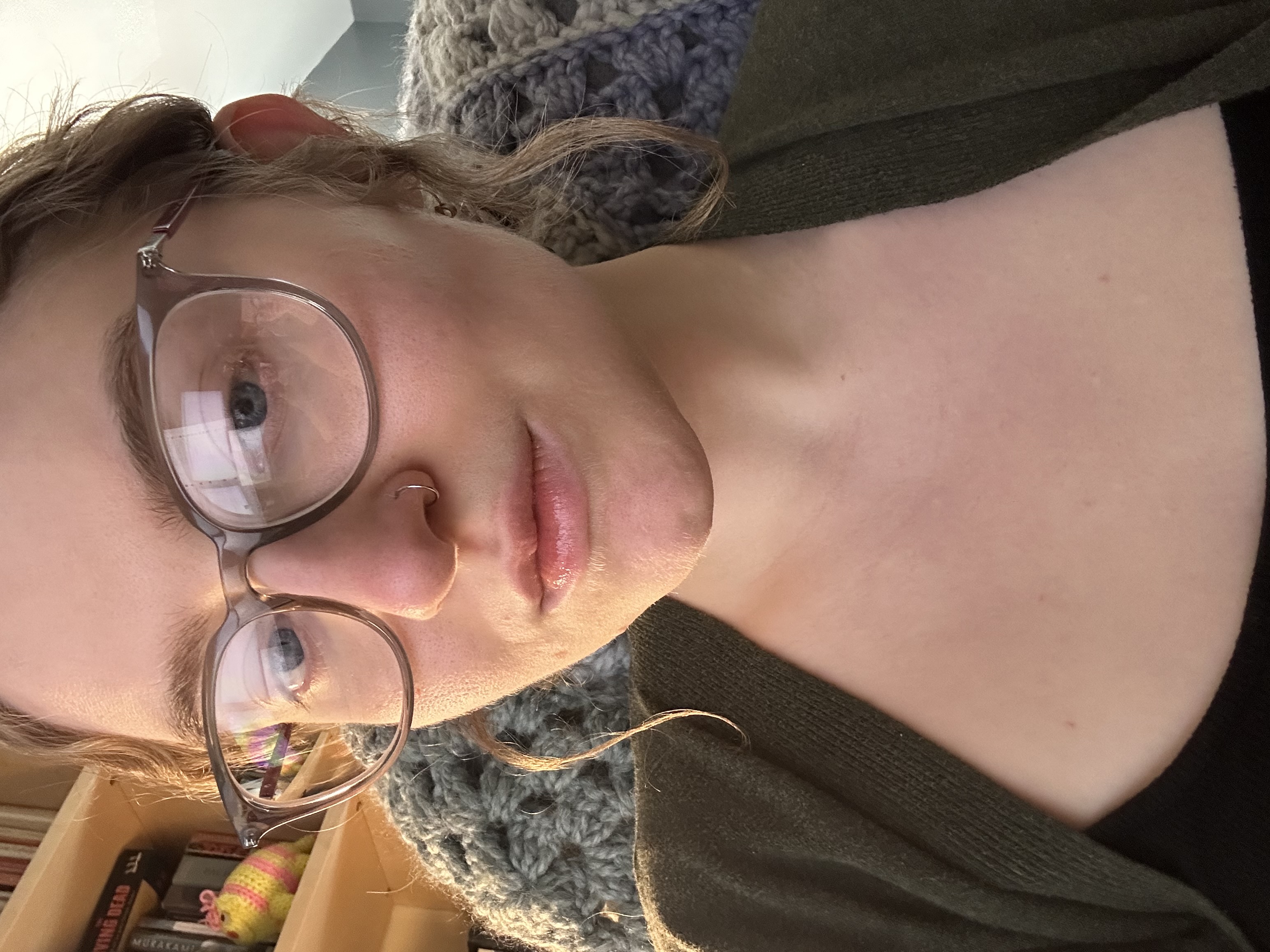
Colin (He/Him) graduated with a doctorate in history from Binghamton University in 2024. He has published academic pieces in a variety of journals and news outlets. His works of short fiction and poetry have appeared or are forthcoming in After Dinner Conversation, Empyrean Literary Magazine, Bloodtree Literature, and others. He currently works at a Civil War museum in Harrisburg, Pennsylvania, and lives with his three cats. In his spare time he enjoys video games, reading, and watching his favorite sports teams be bad at sports (usually). Colin (He/Him) graduated with a doctorate in history from Binghamton University in 2024. He has published academic pieces in a variety of journals and news outlets. His works of short fiction and poetry have appeared or are forthcoming in After Dinner Conversation, Empyrean Literary Magazine, Bloodtree Literature, and others. He currently works at a Civil War museum in Harrisburg, Pennsylvania, and lives with his three cats. In his spare time he enjoys video games, reading, and watching his favorite sports teams be bad at sports (usually).
by Sara London
“How is the pain today?” I ask, pivoting the conversation to our mother tongue. Removing my dressing gown, I toss the soggy thing over a chair, pursuing temperature regulation through my shirtsleeves.
“Bad,” he replies. “So bad today. It’s getting worse.”
“It will.”
“How are you feeling? Has the melancholy eased?” I respond only with a look. Though his comments displease me, his voice gives me life. Hearing him speak—imagining always that it may be the last time, that soon he will become too overcome by his affliction. “Do not stare at me, Auggie, it makes me think you are still ill. Answer me when I talk to you.”
“Please let me help you.”
“You are being so difficult, just let me rest,” he snaps.
“Why do you continue to refuse us? You think sacrificing yourself serves some moral purpose? There is no heaven for you, no matter how much you martyr yourself with us. So why suffer?”
“I will have no disrespect. Enough, get out.”
“You are in no position to tell me, ‘enough.’” Arms against my chest again, my form regresses, into a pout. How difficult it is to assert myself against his forty-two years when I only have twenty-eight sheltered ones of my own, I tell myself. “I am not doing anything wrong. We do not want you to be in pain anymore. I am not sure why this is such a great offense to you.” Pausing, I watch his face warp commensurately with his discomfort. “And if one of us does not do it, you shall lay there like this forever. Until one of us does it. And I am so tired of delaying the inevitable. Rosey cannot; she did it last time. So I will.”
“…told Rosey not to do it,” he tries to say, becoming overwrought. I take the opportunity to capitalize on his deterioration—untucking my shirt, lifting it quickly, throwing it to the ground. Using my hands to wipe my collarbone, to stop the perspiration from dripping down my chest—scars on my arms, my torso, my wrists all sliding around, creating friction on the parts of my body they don’t usually touch. So slimy and sticky, I think for a moment that they may slither off of me, onto the ground, next to the white cotton fabric that just covered them. The many places I’ve hurt myself before, thinking of him hurting someone else to survive. The many places I’ve hurt myself before to return him from the brink of death.
“Stop it, Augustin.”
“No.”
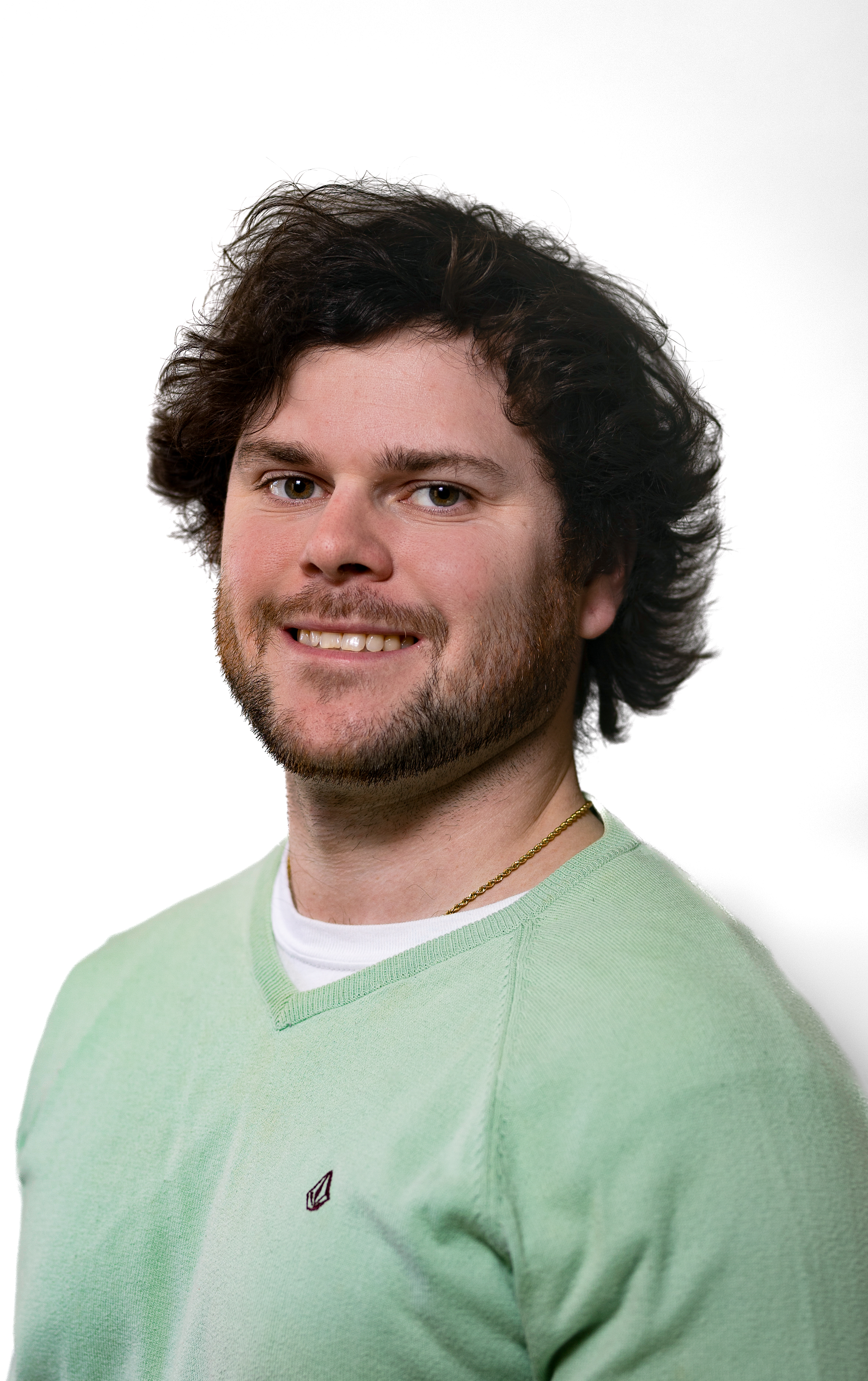
Sara London is an author, freelance writer, and model. Her first non-fiction book, 'The Performance Therapist and Authentic Therapeutic Identity’ was published by Routledge, a Taylor & Francis group. Her second non-fiction book, ‘Authenticity in a Performative World,' is slated for publication in December 2026. Sara's work has been published in outlets such as Twist & Twain, The Inquisitive Eater, and London Arts-Based Research Centre's Indelible. She is a two-time finalist for Adelaide Literary's Fiction Award and was shortlisted for Cult Magazine's Don DeLillo Literary Lottery. Her hobbies include traveling the globe, going to the opera, watching Bette Davis pictures, and other antiquated activities.
by Diane Callahan
Tessa Althea hadn’t made a tile in weeks. Something in her had broken—and her overseer would surely notice. Her shame festered as she turned the tessera between her fingers, the smooth square of glass warm from her constant touch. Instead of flickering with a captured memory, the tile’s face remained agonizingly blank. Kneeling on a velvet pillow in the quiet stone room, surrounded by her fellow soul scribes, Althea felt like an imposter.
Beside her, Tessa Lanier’s slow exhalations seemed effortless. He sat cross-legged, palms facing up, the braid down his back a soft shade of lavender. A scar cut through one cheek, down to the edge of his mouth, a marker of the duel that had driven him to the sanctuary. If all he was running from was dishonor, Althea considered him lucky. Before finding this place, she had never slept through the night or felt free to speak her mind.
But if she couldn’t create tesserae, the overseers would erase her memories of the sanctuary and send her into the endless evergreens, forced to follow the River Yaasa to the nearest town three days’ journey away. She had blistered the soles of her feet beyond repair to escape that life.
“Are you all right, Tessa Althea?” a deep voice whispered in her ear.
She jolted upright, nearly slamming into the speaker’s chin. Tessa Wren towered over Althea, her hair an even darker violet than her own, almost black, curving around the woman’s head like an ocean wave.
Althea bowed. “Concentration! I’m struggling with concentration.”
Diane Callahan is a writer, poet, and editor who also happens to work at an art gallery. On her YouTube channel, Quotidian Writer, she provides practical tips for aspiring authors. You can read her work in Consequence, Translunar Travelers Lounge, Tales to Terrify, Short Édition, and The Sunlight Press, among others. Her debut poetry collection, "The Ship and the Storm," was released
in September 2025 with Story Garden Publishing.

by Rain Sullivan
Rumor round here’s that by the time you start seeing ghosts, you’re well on your way to becoming one. But considering the vast majority of those living out in the soggy backwaters of Nanm Pédi, Louisiana both see ghosts regularly and haven’t the constitution for dying prematurely, I’d long ago let that warning drip from my skin into the very full bucket of baseless premonitions I’ve received over the years doing what I do, where I do it.
’Course, rumors—wild, wicked, or wafer thin—got a funny way of crawling back up the body and packing tight around the brain when standing smack dab in the middle of a deceased serial killer’s murder shack. Especially when a hazy, white fog starts pulsating up through the floorboards and swirling about your toes.
Whipping my phone from my pocket, I start filming.
“Daphne LeBlanc. Kill Joe’s place. Wednesday, October 15th, 2025. Quinn case.”
I crouch lower than my hip-hugging holster’d prefer, trying to peer through the askew slats of this dilapidated shed-on-stilts. It looks like smoke. ’Course that doesn’t make a lick-a’ sense. Kill Joe’s teeters on a particularly mucky bend of the bank. These parts really ain’t dry enough to catch fire. But it’s too damn thick to be river fog.
Bringing my lens closer to the divide, I inadvertently brush the floor with my knuckles and startle back. Both the wood and the mist are fiercely cold and…sharp.
Rain’s a queer Seattle-based author who likes her stories strange, snarky, and a little spooky. She has several short stories published, more coming out this year, and her first book is officially on submission! In her spare time, Rain enjoys backpacking through the Olympic Peninsula with her partner and head-banging to trashy, alt-punk metal. You can connect with her on Instagram, Threads, or TikTok @Write_as_Rain_Sullivan to chat all things books and writing.

by W.K. Ryan
“So, how’s things?” he says.
“Things are okay,” I say.
“Just okay, huh?”
“Yeah, just okay.”
“Well, we need to address that, but before we do, I just wanna dovetail off of something we talked about during our last session. What was it, a month ago?” He laughs.
“Yeah, sorry, I’ve had a lot going on,” I say. I don’t really have much going on at all. Just do it, stupid. Just pull the Band-Aid off!
“No worries, Anne. What matters is that you’re here now. I’m just happy we’re together again.”
That seems genuine; creepy too.
W.K. Ryan is an audio engineer at a university in Southern New Jersey. His fiction blends humor and existential themes with elements of the surreal and fantastical. His story "Reality Services" appears in the April 2025 edition of After Dinner Conversation.
by Donald McCarthy
The noise again. And not just a thunk. There’s a wetness to it too. God help her, it almost reminds her of a slurp. She walks backwards, away from the godforsaken house. She’s not cut out for this, no way. She’ll go home. Quit the job, no problem. Well, yeah, there’d be a problem but fuck it, right?
It is at that point, though, that someone in the house calls out, “Help.”
The voice sounds young. Her age, maybe. Not a child, God, please not that. If it’s a child she has to go in there, and going into the mansion is, of course, strictly forbidden, and absolutely the last place in the world she wants to be right now.
“Help!”
A decision, then. And what’s the point of living if you can’t live with yourself?
So she enters the mansion.
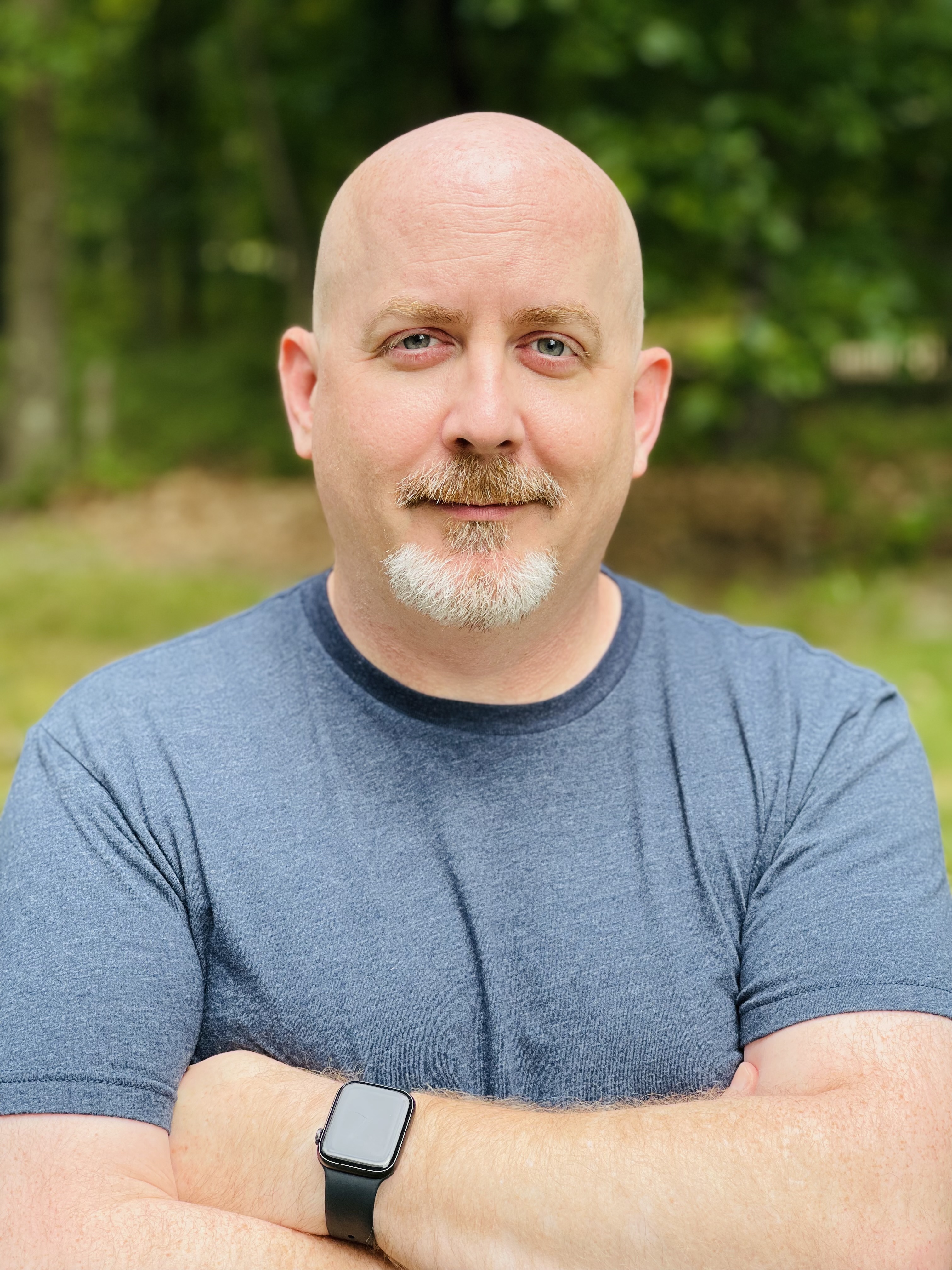
Donald McCarthy is an author from Long Island, New York. He's published short fiction with Asimov’s Science Fiction Magazine, Mythaxis Magazine, James Gunn's Ad Astra, Pseudopod, The Creepy Podcast, The Grey Rooms, and more. His non-fiction has appeared at Salon, Undark Magazine, The Huffington Post, Nightmare Magazine, and more. A full list of his publications can be found at http://www.donaldmccarthy.com.
by Elese Mathis
The work was robotic. The same motions day after day.
Pull the lever. Tighten the valve. Release the steam.
In the factory, I was as much of a machine as the tools I used. My hands moved on their own with little thought from me. In front of me, through the tank’s brushed metal, was my own blurry reflection. My skin was dirty and splotched with grease. My eyes hollow.
I didn’t want to continue, but what was there but the work? I kept moving.
Tighten the valve. Release the steam. Pull the lever—
“Verity, watch out!” Constance shouted from the second floor.
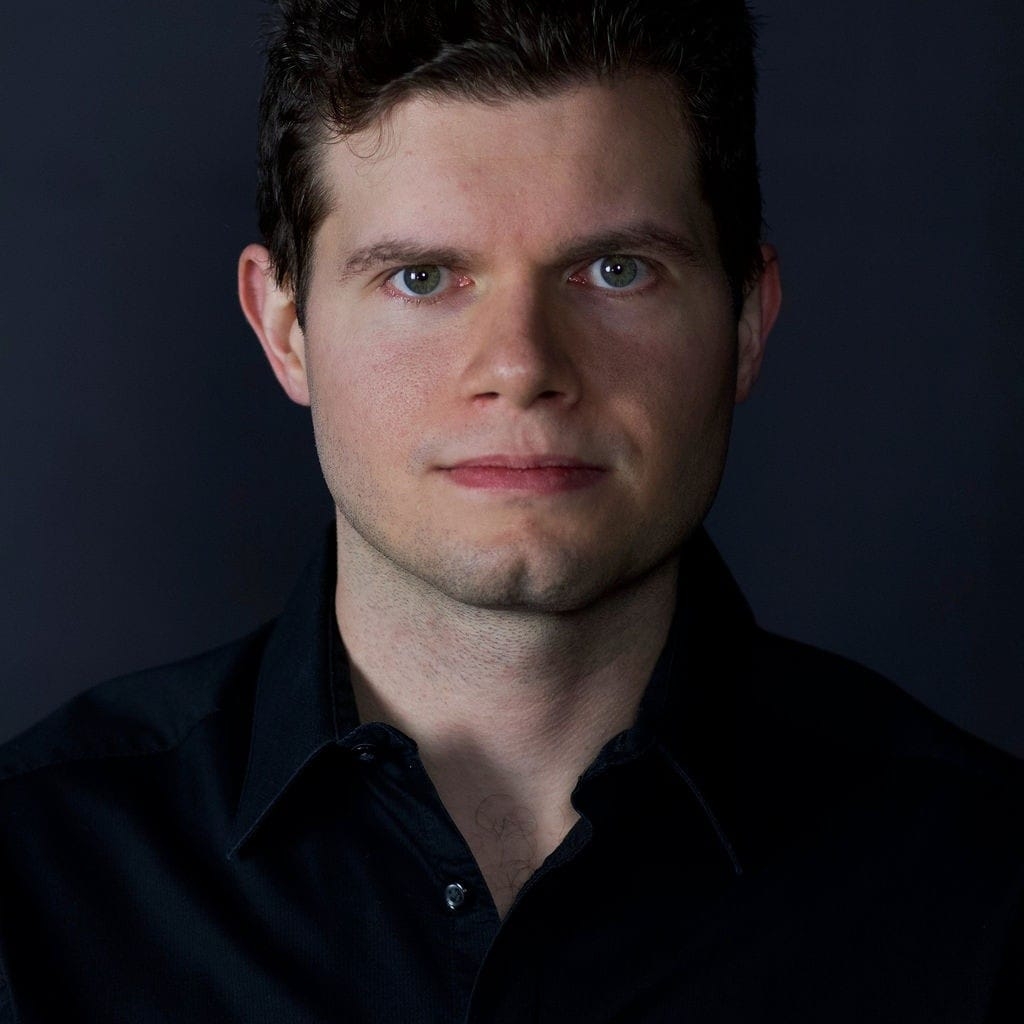
Elese Mathis is a Certified Public Accountant and alumna of the University of Central Florida. When she steps away from the world of spreadsheets and finance, she turns to reading and writing speculative and science fiction. As a native Floridian, she gravitates toward activities befitting the Sunshine State. You can often find her hiking and camping in local parks, kayaking through springs, or stretched out on the beach with a book in hand.
by J.J. Hillard
It’s the same recurring dream. She’s alone, floating weightless in a void. It’s dark, cold, dimensionless.
In her worn, leather recliner, the woman snores fitfully, awakens with a start. The room rocks slightly. Disoriented, she looks around, regathers her reality.
“Cal?” She shakes her head. “Tsk, tsk, you’re surely going mental, Meghan Una McMurphy,” she says aloud with the hint of an Irish accent.
Her apartment is small but tidy. In its confined spaces, items from the past and the present coexist under a shared patina of dust and disuse. Sunlight filtered through sheer curtains brightens the living room. No cat naps there in the shafts of light, but a laptop sleeps on a desk. Like a still life image, but it’s live.
Scale models of NASA spacecraft perch on a bookshelf. A bronze cremation urn stands tall among them; it’s torpedo-shaped with a pointy tip like a 1950s rocket ship. Engraved on it are the initials “C. E. M.” Below is the Latin inscription: Per aspera ad astra. On one wall, a digital image displayer is askew. It cycles through a series of gray-hued lunar landscape panoramas. Near that are two framed diplomas:
—Callum Evan McMurphy, Stanford University M.S. Aeronautical Engineering 1968
—Meghan Una McMurphy, Stanford University B.A. Education 1970
Ron Fein is a Boston-area public interest lawyer who, in his copious spare time, writes science fiction, fantasy, horror, mystery, and comedy. His work appears in Nature, Factor Four, Daily Science Fiction, Nonprofit Quarterly, MetaStellar, NoSleep Podcast, Mystery Tribune, and McSweeney’s Internet Tendency, and has been translated into Croatian and Romanian. Find him at http://ronfein.com/ and on BlueSky @ronfein.bsky.social.